Why Sweet Cyanide?
Cherries and almonds have been keeping suspicious company for a very long time.
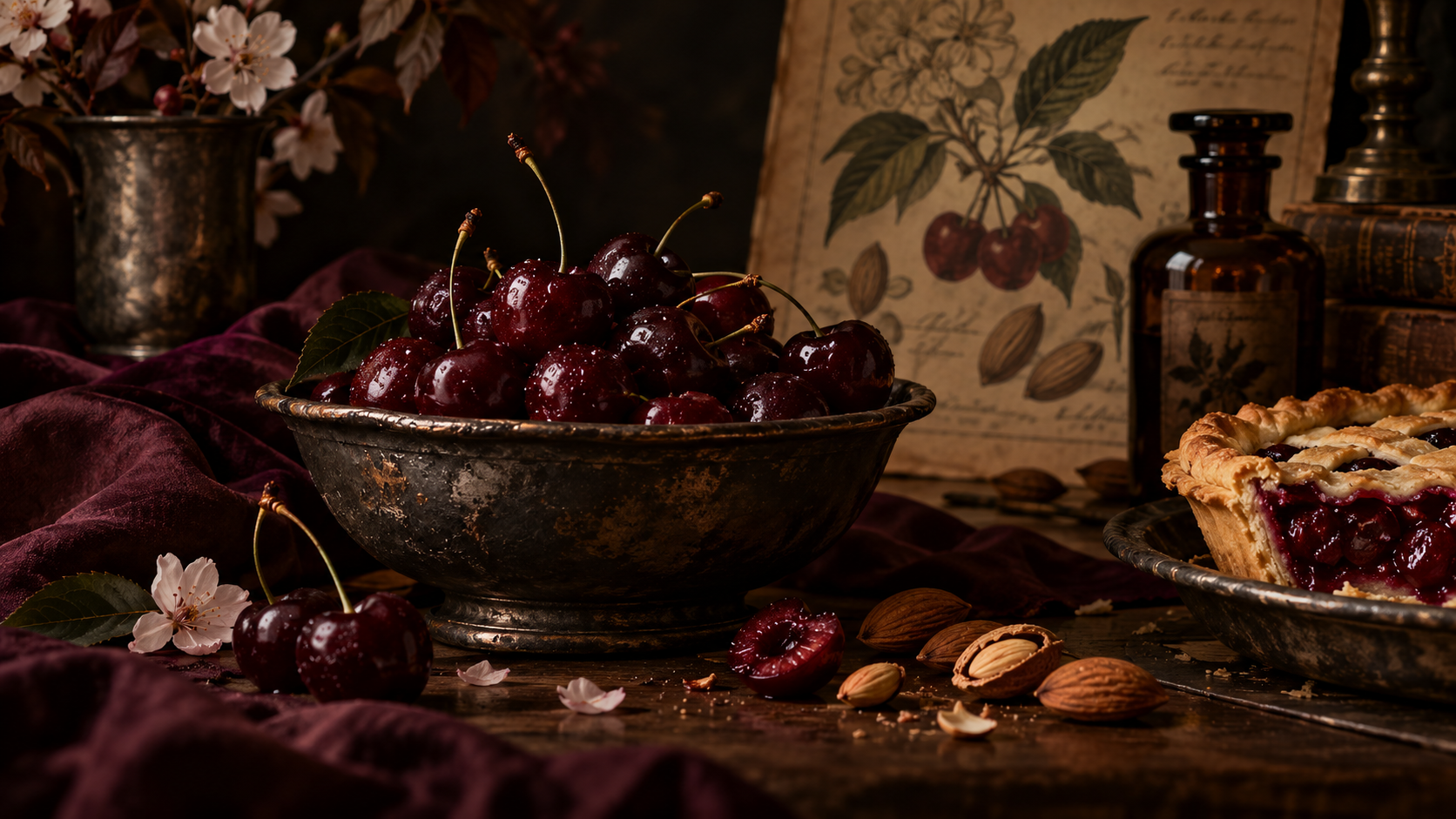
They also happen to taste ridiculously good together, which is how a cherry-and-almond pie ended up on the first Nightshade & Sugar menu with the name Sweet Cyanide.
The name sounds dramatic. The connection, however, is real.
If you’ve ever opened a bottle of almond extract and thought, Why does this smell vaguely like cherries? — you’re not imagining it. Cherries, almonds, apricots, peaches and other members of the stone-fruit family share some interesting chemistry, particularly in their pits and kernels. One of the aroma compounds associated with bitter almonds and stone-fruit kernels is benzaldehyde, which is responsible for that very recognizable bitter-almond, almost cherry-like scent.
And then there’s the cyanide part.
Some stone-fruit pits and bitter almonds contain naturally occurring compounds called cyanogenic glycosides. When those compounds are broken down, they can release hydrogen cyanide.
Which is considerably less charming than pie.
Cyanide also has one of those strangely specific bits of lore attached to it: hydrogen cyanide is often described as smelling like bitter almonds. The catch is that not everyone can smell it. The ability appears to be partly genetic, and a significant chunk of the population can’t detect the odor at all. So the classic murder-mystery line about someone smelling almonds? Useful for atmosphere. Less useful as actual toxicology.
Before anyone begins reconsidering their dessert order: Sweet Cyanide is made with perfectly ordinary, food-safe ingredients. There are no crushed cherry pits involved, no mysterious apothecary bottles under the counter, and no Victorian inheritance disputes (that I know of).
Fortunately, almond extract is much more cooperative.
The danger is mostly to your self-control.
The connection between cherry and almond goes far beyond chemistry, though. Bakers have paired the two for generations because they naturally reinforce each other. You see the relationship throughout European baking: cherries with frangipane, almond cakes with stone fruit, marzipan and preserves, Bakewell tarts, and countless pastries where almond sits quietly behind the fruit and makes everything taste a little richer.
Long before I decided to name a pie after poison, bakers had already figured out that cherry and almond belonged together.
For Sweet Cyanide, I wanted the cherry to stay firmly in charge.
The filling is tart and deeply fruity rather than sugary-sweet, with almond running underneath it instead of taking over. I love almond, but there is a very short distance between fragrant and someone has broken into the marzipan cabinet, so restraint matters.
Then it all goes into buttery pastry, because most problems are improved by buttery pastry.
The result is familiar enough to understand immediately, but just unusual enough to make you stop for a second.
That balance is a lot of what I want Nightshade & Sugar to be.
The names aren’t meant to be dark simply because I own a lot of black clothing and apparently cannot be trusted with a branding project. The best ones have some connection to what’s actually inside the box.
Forbidden Fruit is apple.
Velvet Hemlock pairs dark blackberry with thyme.
And Sweet Cyanide gets its name from the strange little relationship between cherries, almonds and the chemistry hiding inside their family tree.
There’s a story behind the food.
That’s also the idea behind Notes From the Apothecary.
This is where I’ll be writing about the ingredients, histories, traditions and occasional questionable decisions behind the things I bake — why certain flavors belong together, where old recipes came from, and how something that has existed for centuries ends up on a small-batch bakery menu in Oklahoma City.
Sweet Cyanide felt like the right place to start.
After all, Nightshade & Sugar was probably never going to open its notebook with a sensible discussion of vanilla.